
Right around now, every June, the messages start. Parents who had a calm, cooperative kid all spring suddenly find themselves dealing with meltdowns over nothing, constant sibling fights, and a level of restlessness that seems to come out of nowhere. "What changed?" they ask. The answer is almost always the same: school ended.
It feels counterintuitive. Shouldn't less pressure and more freedom make kids happier and easier to live with? In theory, yes. In practice, the opposite tends to happen, and there's a clear reason why: school provides an enormous amount of invisible structure that most of us never think about until it's gone.
The Structure You Didn't Know Was There
A school day is built almost entirely around external scaffolding. Wake-up time is fixed. Meals happen on a schedule. Activities rotate every 40 to 60 minutes. Expectations are clear and consistently enforced by multiple adults. Physical movement, mental focus, and social interaction are all built in without a child ever having to choose or initiate any of it themselves.
When summer arrives, all of that scaffolding vanishes at once. Suddenly a child has to self-regulate their own wake time, find their own activities, manage boredom without prompts, and navigate long unstructured hours with siblings or screens as the default fallback. Most children, even well-behaved, easygoing ones, simply don't have the executive function to manage that much open space on their own yet. The result isn't defiance. It's overwhelm.
"Children don't rebel against structure. They rebel against the anxiety of not knowing what's expected of them. Remove the structure, and you remove the thing that was actually keeping them calm."
Dr. Kenneth Ginsburg, Pediatrician & Author of Building Resilience in Children and TeensThe Cost of an Unstructured Summer
This isn't just about a few rough weeks at home. Researchers have long studied what's known as the "summer slide," the loss of academic skill and routine that happens over extended breaks, particularly in reading and math. But the slide isn't only academic. Behavioral regulation, attention span, and emotional resilience can erode just as easily when they go unpracticed for two months straight.
September often becomes a frantic scramble to "get back into the routine" right as the academic pressure resumes. Parents who maintain even modest structure through the summer tend to skip that scramble entirely. Their kids walk back into the classroom in September having never fully lost the habits the rest of the class is busy relearning.
You Don't Need to Recreate a Full Schedule
The goal isn't to replicate the school day at home, and trying to do so usually backfires; summer should still feel like summer. The goal is to anchor a few key elements of structure so a child's nervous system has something steady to hold onto, while leaving plenty of room for the freedom and spontaneity that makes summer worth having.
Why a Standing Class Works Better Than a Calendar
Most parents try to solve summer structure with a chore chart or a printed schedule taped to the fridge. These rarely survive past the second week, because they depend entirely on the parent to enforce them, and parents are exhausted too. What actually works is outsourcing part of the structure to something a child shows up to consistently, with adults other than you holding the standard.
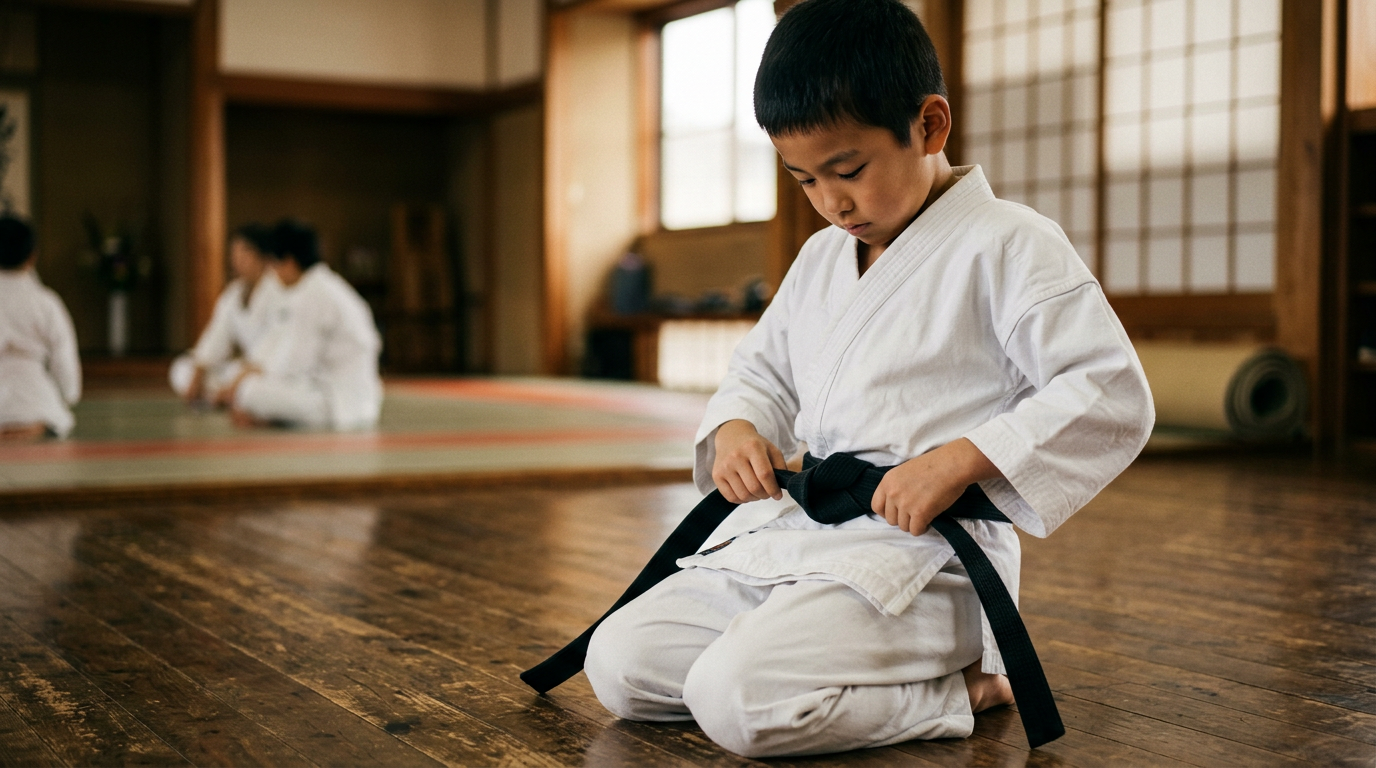
This is exactly why families who keep their child enrolled in martial arts through the summer report an easier transition than almost any other group. Two or three fixed times a week, a child arrives at a place where the expectations are clear, the routine is consistent, and real progress is visible. It's the single anchor that keeps the rest of the week from drifting into chaos, and it requires nothing from you except getting them there.
It also solves the boredom problem from the inside out. A child working toward their next belt has a goal to chase through the slow afternoons of summer, instead of drifting from one screen to the next looking for something to fill the time.
Make This the Summer That Doesn't Feel Like a Battle
You don't need to overhaul your entire summer to fix this. You need one or two anchors your child can rely on, consistently, regardless of what the rest of the day looks like. A standing class is one of the simplest, lowest-effort ways to give them that, while building focus, confidence, and discipline at the exact time of year those skills tend to quietly slip away.
Let this be the summer where September arrives and your child walks back into the classroom exactly as ready as they were in June.
Give Their Summer an Anchor
Book a complimentary trial class and see how one standing commitment can change the whole season.
Claim Your Free Trial Class